Apparelall
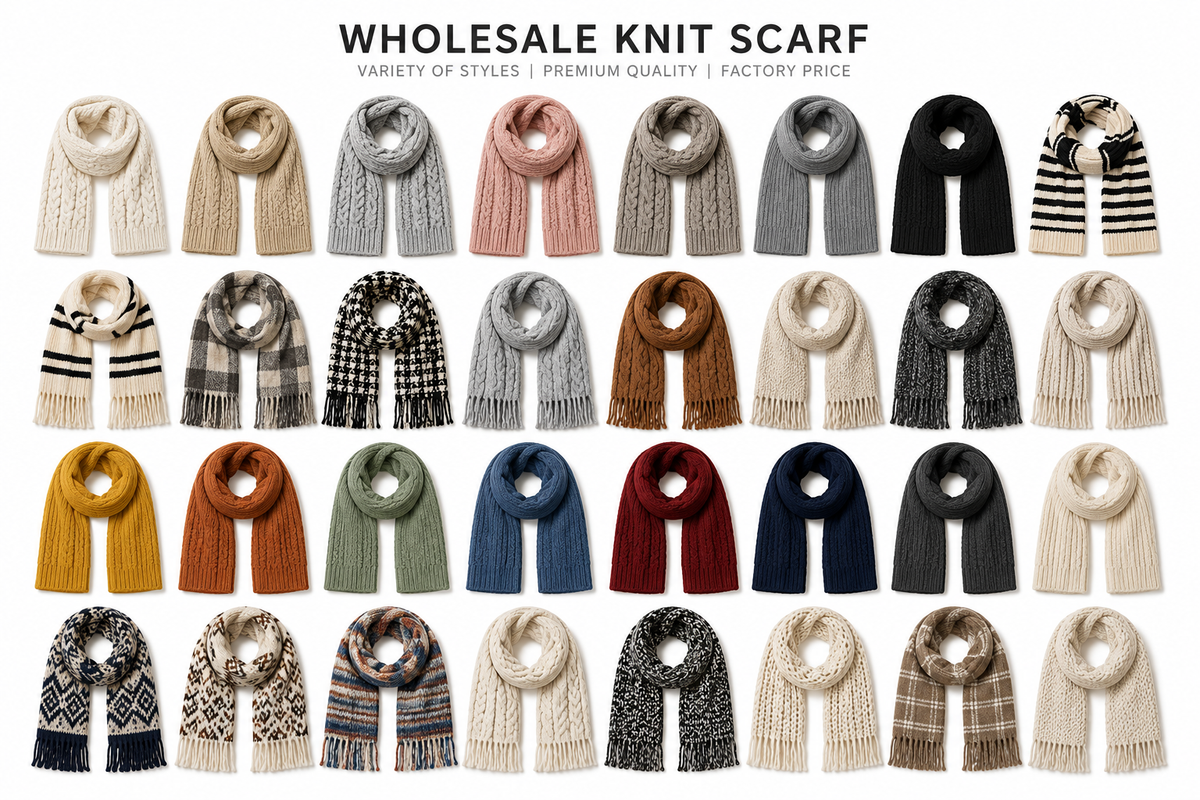
Wholesale Knit Scarf Supplier Manufacturer From China
Wholesale Knit Scarf Supplier Manufacturer From China
Couldn't load pickup availability
Professional Scarf Sourcing Guide – Complete Supplier Information for Bulk Buyers
Overview
Sourcing scarves from China has become increasingly competitive, with factories offering diverse materials, flexible customization, and efficient supply chains. Whether you are a boutique retailer, online seller, or established brand looking to expand your accessories line, understanding the full picture of scarf sourcing helps you negotiate better deals and avoid costly mistakes. Below, we break down every essential dimension of working with a reliable scarf manufacturer China, covering everything from minimum orders to delivery timelines, so you can source with confidence.
Minimum Order Quantity (MOQ) – What to Expect
MOQ varies significantly based on material, design complexity, and production method. Here is a realistic breakdown across different scarf categories:
| Scarf Type | Standard MOQ (pcs) | Low MOQ (negotiable) | Sample Order |
|---|---|---|---|
| Printed polyester scarves | 300–500 | 100–200 | 1–5 pcs |
| Solid color cotton scarves | 500–1000 | 300 | 1–5 pcs |
| Woven wool/cashmere blends | 200–300 | 100 | 1–3 pcs |
| Knit scarves (basic) | 300–500 | 200 | 1–5 pcs |
| Custom jacquard/dobby weave | 500–1000 | 300 | 1–3 pcs |
| Private label with custom tags | 500–1000 | 300 | 1–5 pcs |
Most scarf suppliers prefer higher quantities for woven or jacquard styles due to loom setup costs. For startups, many scarf factory China operators offer sample runs at a premium per piece, allowing you to test the market before committing to full production. Digital printed scarves typically have lower MOQs since no engraving or cylinder preparation is required—just file processing and color matching.
Material Options – Choosing the Right Fabric
Selecting the right material affects not only the look and feel but also pricing, production timeline, and target market. Below are the most commonly used materials among fashion scarf manufacturers:
| Material | Characteristics | Best For | Price Range (FOB) |
|---|---|---|---|
| Polyester (digital print) | Lightweight, vibrant colors, wrinkle-resistant | Summer scarves, fashion accessories | $1.50–3.50 |
| Silk (mulberry/charmeuse) | Luxurious sheen, soft drape, natural protein fiber | High-end fashion, gift sets | $8.00–20.00+ |
| Cotton (woven/knit) | Breathable, natural feel, easy care | Everyday wear, casual brands | $2.50–5.50 |
| Wool (merino/lambwool) | Warm, insulating, natural crimp | Winter collections, cold climates | $5.00–12.00 |
| Cashmere blend (5–30%) | Ultra-soft, lightweight warmth, premium perception | Luxury labels, holiday gifting | $10.00–30.00+ |
| Acrylic/polyester knit | Budget-friendly, colorfast, machine washable | Mass-market winter scarves | $2.00–4.50 |
| Viscose/rayon | Silky feel, good drape, affordable | Fashion-forward designs | $3.00–6.00 |
A professional silk scarf manufacturer will typically offer 100% mulberry silk (grade 6A or 5A) or silk-cotton blends. For budget-conscious buyers, many cotton scarf wholesalers provide combed or ring-spun cotton with better softness and durability. If sustainability matters to your brand, ask about organic cotton or recycled polyester options—many factories now hold GOTS or GRS certifications.
Lead Time – From Order to Production Start
Lead time is the period between order confirmation (after sample approval) and production commencement. For most scarf wholesale orders, here is what you can expect:
| Order Type | Lead Time (days) |
|---|---|
| Stock colors, plain weave (ready materials) | 3–5 days |
| Printed designs (after artwork approval) | 5–7 days |
| Custom woven/jacquard (warp/weft setup) | 7–10 days |
| Custom knit (programming knitting machines) | 7–10 days |
| Private label (tags, packaging materials procurement) | 5–8 days |
| Complex multi-color prints or embroidery | 10–12 days |
Total lead time from confirmed order to production line start usually ranges between 3 to 10 working days, depending on how many new colorways, custom yarns, or special finishes are involved. Many scarf suppliers China keep popular fabrics in stock, which can shorten lead time to just 2–3 days for solid-color styles.
Production Time – How Long to Complete Your Order
Production time is the actual manufacturing duration once the line starts running. This varies primarily by total quantity and process complexity.
| Quantity Range | Digital Print (days) | Woven (days) | Knit (days) |
|---|---|---|---|
| 100–300 pcs | 3–5 | 5–7 | 5–7 |
| 301–1000 pcs | 5–7 | 7–10 | 7–10 |
| 1001–3000 pcs | 7–10 | 10–14 | 10–14 |
| 3000–10000 pcs | 10–14 | 14–20 | 14–18 |
| 10000+ pcs | 14–20 | 20–25 | 18–22 |
For standard winter scarf manufacturer orders of 1,000–2,000 pieces, production usually wraps up in 7–12 working days. Digital printing is significantly faster for short runs because there is no screen engraving—just direct inkjet transfer. Keep in mind that embroidery, beadwork, or fringe attachment can add 2–4 additional days, so factor these into your planning.
Quality Assurance – What Controls Are in Place
Reputable scarf manufacturers follow multi-stage inspection protocols to catch defects early. Quality assurance typically covers the following checkpoints:
| Stage | Inspection Focus | Method |
|---|---|---|
| Raw material incoming | Yarn/fabric weight, color fastness, shrinkage test | Lab testing, visual inspection |
| In-production (first 100 pcs) | Pattern alignment, stitching tension, print registration | 100% visual check, random measurement |
| Mid-production (50% complete) | Dimensional accuracy, color consistency across batches | AQL sampling (usually Level II) |
| Pre-shipment (100% complete) | Overall appearance, packaging, accessory attachment | AQL 1.5 or 2.5, client inspection invited |
| Final random audit | Packing list verification, carton weight, barcode scan | Random 10% open-box check |
Most sourcing agents in China recommend an AQL 2.5 standard for apparel accessories—this translates to an acceptable quality level of 2.5% defect rate in the lot. For higher-end products like silk or cashmere, many buyers request AQL 1.0 or 1.5 to ensure premium finish. Ask your china sourcing specialist to arrange third-party inspection (e.g., SGS, Bureau Veritas, Intertek) if you cannot visit the factory in person.
Certifications – Meeting Regulatory Requirements
Certifications matter greatly when selling to department stores, online marketplaces like Amazon, or international retailers. Here are the most frequently requested certifications among apparel accessories suppliers:
| Certification | Applicable Materials | Purpose |
|---|---|---|
| OEKO-TEX Standard 100 | All textiles | Ensures no harmful chemicals (azo dyes, formaldehyde, heavy metals) |
| GOTS (Global Organic Textile Standard) | Organic cotton, wool | Verifies organic fiber content and ethical production |
| GRS (Global Recycled Standard) | Recycled polyester, cotton | Tracks recycled content and social compliance |
| ISO 9001 | Manufacturing process | Demonstrates quality management system |
| ISO 14001 | Environmental management | Shows commitment to reducing environmental impact |
| REACH / RoHS | Chemical compliance (EU) | Compliance for EU-market products |
| CPSIA (Children's products) | Scarves for kids under 12 | US safety requirement for lead/phthalates |
| Woolmark | Wool/cashmere blends | Certifies wool content and quality |
Many scarf factory China operators can provide OEKO-TEX as a baseline certification at no extra charge, while GOTS or GRS may require a premium due to segregation and documentation costs. If your brand targets the EU market, REACH compliance is non-negotiable. For US buyers, ensure your custom scarf manufacturer understands CPSC reporting requirements if you sell children's products.
Packaging Options – Standard vs. Retail
Packaging plays a critical role in product presentation, shipping protection, and brand experience. Most scarf suppliers offer multiple packaging tiers:
| Packaging Type | Description | Cost Per Unit (USD) | Best For |
|---|---|---|---|
| Polybag (basic) | Clear PE or OPP bag, size matched | $0.05–0.10 | Budget, bulk shipment |
| Polybag + hang tag | Adds branded card or price tag | $0.10–0.25 | Mid-range brands |
| Paper sleeve | Kraft or white paper sleeve with window | $0.20–0.50 | Eco-conscious brands |
| Box + tissue wrap | Rigid or foldable box with silk paper | $0.50–1.50 | Gifting, luxury |
| Drawstring pouch | Cotton, velvet, or organza pouch | $0.30–0.80 | Boutique, direct-to-consumer |
| Custom rigid gift box | Full-color printed box with inserts | $1.50–4.00 | Premium retail, holiday sets |
For air freight or express shipments, lightweight polybags are the most economical. For ocean freight, carton packing is standard—typically 50–100 pieces per carton depending on scarf thickness and folded size. Many fashion scarves wholesale buyers prefer polybag + branded hang tag as a compromise between cost and retail readiness.
Retail-Ready Packaging – Stand Out on Shelves
If you supply to physical retailers or plan to sell via DTC channels, retail packaging makes a significant difference in conversion rates. Consider these elements when discussing with your private label scarf partner:
-
Hang tags: Full-color double-sided card with barcode, size, material, and care instructions
-
Branded polybags: Custom-printed OPP bags with your logo (MOQ 3,000–5,000 bags)
-
Neck labels/woven labels: Custom labels sewn into the scarf or looped around (options include satin, woven damask, or printed heat-transfer labels)
-
Care/content labels: Required by FTC in the US—fiber composition and country of origin must be clearly displayed
-
Eco-friendly packaging: Recyclable paper sleeves, biodegradable polybags, or reusable canvas pouches (great for sustainability-focused brands)
A competent OEM scarf manufacturer will help you source all these components—many factories have in-house packaging departments or long-term packaging partners to streamline the process.
Shipping Time – Delivery to Your Doorstep
Shipping timelines depend on your chosen mode of transport and destination. Here is a realistic estimate for major markets when working with a scarf wholesale China supplier:
| Shipping Method | US West Coast | US East Coast | Europe (EU) | Australia | Estimated Cost (per kg) |
|---|---|---|---|---|---|
| Air Freight | 3–5 days | 4–6 days | 4–6 days | 4–6 days | $6–12 |
| Express Courier (DHL/FedEx/UPS) | 2–4 days | 3–5 days | 2–4 days | 3–5 days | $8–15 |
| Sea Freight (LCL) | 18–22 days | 25–30 days | 28–35 days | 18–22 days | $0.50–1.50 |
| Sea Freight (FCL) | 16–20 days | 22–28 days | 25–30 days | 16–20 days | $0.30–0.80 |
| Rail (Europe) | N/A | N/A | 18–22 days | N/A | $0.60–1.20 |
Cost estimates are approximate as of current market conditions and fluctuate with fuel prices and exchange rates.
Air express is best for smaller orders (under 200 kg) or seasonal rush items. Ocean freight becomes significantly cheaper for orders above 300 kg, especially for LCL (less than container load) consolidation. If you are buying clothes in bulk from China, sea freight offers the best per-unit shipping cost. Always factor in customs clearance and last-mile delivery—your sourcing company in China should handle export documentation and forwarder coordination.
Customization Services – Making the Product Yours
One of the biggest advantages of working with a custom scarf manufacturer is the ability to differentiate your brand through design and details. Here is what you can customize:
| Customization Element | Available Options | Minimum for Custom |
|---|---|---|
| Artwork & Print | Upload your own pattern, or factory design team creates from mood board | 200–300 pcs for digital print; 500+ for screen print |
| Size & Shape | 70x70cm, 90x90cm, 55x200cm, oversized, infinity, bandana, rectangular, square | None (just discuss with factory) |
| Fringe Details | Raw fringe, twisted fringe, knotted fringe, no fringe | None |
| Weave Structure | Plain, twill, satin, jacquard, dobby, herringbone, basket weave | 300–500 pcs |
| Color Matching | Pantone match or custom dye lot | 300 pcs |
| Labels & Tags | Woven labels, satin labels, heat-transfer labels, metal logo charms, silicone badges | 500–1000 pcs |
| Special Finishes | Anti-pilling, wrinkle-resistant, water-repellent, UV protection, anti-static | 500+ pcs |
| Trims | Beads, sequins, tassels, embroidery, appliqué, lace edge | 300–500 pcs |
For a silk scarf manufacturer, customization typically focuses on digital printing and hemming finishes (hand-rolled vs. machine-stitched). For a knit scarf manufacturer, customization includes stitch patterns, stripe combinations, and blended yarn compositions.
Sourcing Support – Leveraging Local Expertise
Navigating the Chinese manufacturing landscape can be challenging without on-the-ground presence. This is where professional sourcing agents in China come in. A reliable china sourcing consultant or sourcing specialist provides the following value:
-
Factory vetting and auditing – verifying credentials, capacity, and social compliance
-
Price negotiation – leveraging market knowledge to secure competitive rates
-
Sample coordination – managing sampling iterations and shipping samples to you
-
Production monitoring – conducting regular factory visits and quality checks
-
Logistics consolidation – combining orders from multiple factories into one shipment
-
Export documentation – preparing commercial invoices, packing lists, and certificates of origin
-
Language and cultural bridge – resolving miscommunications and avoiding costly misunderstandings
Many sourcing company in China operators charge a commission (typically 3–8% of FOB value) or a fixed project fee. For first-time buyers, working with a chinese sourcing agent significantly reduces risk and saves time. Some agents specialize in apparel and accessories specifically—they understand fabric construction, seasonal trends, and lead time management better than generalist agencies.
Why Work Directly with a Scarf Factory in China
Partnering directly with a scarf manufacturer rather than a trading company offers several distinct advantages:
-
Lower unit costs – no middleman markup (often 10–30% savings)
-
Faster communication – design changes reach the production floor immediately
-
Greater flexibility – factory can adjust MOQ, colors, or packaging more readily
-
Transparent production – video calls and photo updates from the actual production line
-
Quality ownership – factory takes full responsibility for defect resolution and rework
-
Long-term partnership – build a relationship that benefits both parties over multiple seasons
Many scarf suppliers China specialize in specific materials—some only do silk, others focus on wool or knit. Identify factories that align with your core product category and request to see their latest collection for a sense of their design capability.
Compliance and Ethical Sourcing
Increasingly, retailers and consumers expect transparency about working conditions and environmental impact. Responsible fashion scarf suppliers address these concerns through:
-
Social compliance audits – BSCI, SA8000, or SMETA reports available upon request
-
Wastewater treatment – proper treatment of dye house effluent (especially critical for silk and cotton)
-
Energy efficiency – use of LED lighting, solar panels, or heat recovery systems
-
Fair wages – adherence to local minimum wage laws and overtime limits
-
Child labor prevention – strict policies and identity verification systems
If your brand positions itself as ethical or sustainable, ask your custom scarves wholesale partner to share their factory code of conduct and recent audit results. Many mid-to-large scale factories now publish these publicly or provide them with NDAs.
Common Mistakes to Avoid When Sourcing Scarves from China
Based on years of experience in scarf sourcing China, here are pitfalls to watch out for:
-
Skipping sample approval – never authorize production without a physical, approved pre-production sample
-
Assuming color accuracy from screen – always request a lab-dip or strike-off for color approval
-
Underestimating shipping costs – ask for DDP (Delivered Duty Paid) quotes to avoid surprise customs fees
-
Forgetting care labels – US and EU markets require specific labeling—confirm your factory provides compliant labels
-
Ignoring seasonal timing – winter collections must ship by August; summer collections by January
-
Not testing fabric composition – verify material percentages through independent lab testing if claims seem suspect
-
Neglecting packaging protection – poorly packaged scarves arrive wrinkled or damaged; insist on tissue interleaving for delicate fabrics
A good china sourcing specialist will guide you through each of these steps and flag issues before they become costly problems.
How to Get Started – Practical Steps
Ready to begin your scarf sourcing project? Here is a straightforward roadmap:
-
Define your product specs – material, size, print style, quantity, target price
-
Research and shortlist factories – use B2B platforms (Alibaba, Global Sources, Made-in-China) and industry directories
-
Request samples – order 3–5 samples from shortlisted scarf suppliers to evaluate quality firsthand
-
Compare quotes – ensure quotes include the same specifications (fabric composition, packaging, lead time)
-
Visit or video-call the factory – assess professionalism, cleanliness, and communication
-
Negotiate terms – payment schedule (usually 30% deposit + 70% balance before shipment), warranty period, rework policy
-
Place a trial order – start with MOQ or slightly above to test quality consistency and logistics
-
Scale up – once satisfied, place larger orders and build long-term relationship
For first-timers, collaborating with a sourcing agent china or china source agent during the first 1–2 orders can be money well spent—they help you avoid rookie mistakes and establish a solid foundation.
Summary Table – Key Sourcing Parameters at a Glance
| Parameter | Typical Range / Standard |
|---|---|
| MOQ | 100–500 pcs (standard), 50–100 pcs (negotiable for higher price) |
| FOB Port | Shanghai, Ningbo, Shenzhen, or Guangzhou (specify in quote) |
| Payment Terms | 30% deposit, 70% balance against BL copy; LC available for large orders |
| Sample Cost | $30–100 per design (refunded on bulk order) |
| Sample Lead Time | 5–10 working days (from artwork approval) |
| Production Time | 5–15 days (depending on quantity and complexity) |
| Quality Inspection | AQL 2.5 standard (Level II), third-party inspection optional |
| Certification | OEKO-TEX Standard 100 (base); GOTS, GRS, ISO available on request |
| Standard Packaging | Individual polybag + carton (export-worthy) |
| Retail Packaging | Custom hang tags, branded polybags, boxes (additional cost) |
| Port to Door (US) | 18–30 days sea; 3–5 days air |
| Port to Door (EU) | 25–35 days sea; 3–5 days air |
| Port to Door (AU) | 18–22 days sea; 3–5 days air |
Final Recommendation
Sourcing scarves from China is a proven way to achieve competitive pricing, wide material variety, and flexible customization—provided you work with the right partner. Whether you are a startup exploring your first collection or an established brand scaling up, taking the time to understand each sourcing parameter pays off in better margins, consistent quality, and smoother logistics.
Take your time to vet factories, request samples, and clarify every detail in writing. A professional fashion scarf supplier values clear communication and long-term relationships over short-term gains. With the right approach, you can build a reliable supply chain that supports your brand growth season after season.
For those who prefer a hands-off approach, partnering with a sourcing agent China can streamline the entire process—from factory selection to shipment consolidation. The key is finding an agent who specializes in apparel and accessories, not just general merchandise, so they understand your specific quality standards and timelines.
Start your sourcing journey today by defining your scarf collection requirements and reaching out to 3–5 shortlisted factories for samples. Compare, evaluate, and choose the partner that best aligns with your brand values and business goals. Happy sourcing!